I’m one of those people who wants to help others. I chose to do it by helping people understand the products and technologies they have to use in their daily lives. I’ve devoted myself to learning about people and technology, so I can help just about anyone with just about anything.
I’m often the first writer in (into the company, into a specific team, program, or product). Sometimes there are no docs. Sometimes there are docs, but they’re not written for any clear audience. I start by figuring out what exists and what’s missing, then I define the audience, what they need, and where they need it. From there, I build.
If I’m not the first one in, and there’s already a strong team and a solid system in place, that is great. I’m glad to join, learn, and start contributing. There's very little I haven't seen.
I help organizations improve and evolve their documentation systems, whether that means conversions, new tools, or getting things working the way they should.
The core of my documentation career has always been the writing. My job is to write the content that people need. I meet users where they are and give them what they need, in the way that works best for them in that moment.
Documentation should never be an afterthought. It’s an integral part of the product development lifecycle (PDLC). I ensure that the Documentation Team is as effective as our documentation product.
Battlemouse Solutions is my consulting company, bringing together writing, design, and technical documentation.
I offer writing and editing services for clear, effective content, along with design and marketing support—logos, print materials, graphics, and websites that help businesses look good and connect with their audience.
I also work in technical documentation, doing whatever teams need—from hands-on writing and editing to planning, structuring, and improving documentation.
TWIN (Technical Writers International Network) is a resource hub for technical writers. It’s a place to find tools, training, books, communities, and anything else that helps us do our jobs better.
It started as something I wanted to build years ago, when it didn’t feel like there were accessible resources for technical writers. I've realized there is an even greater need for these resources now. Our industry is too vast for people to know everything about it. We need to have a place to learn, research, and share.
TWIN is my way of putting something back—something open, practical, and actually useful.
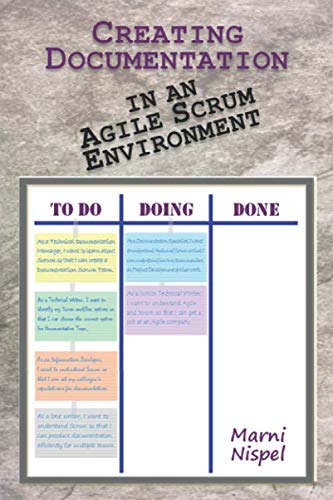
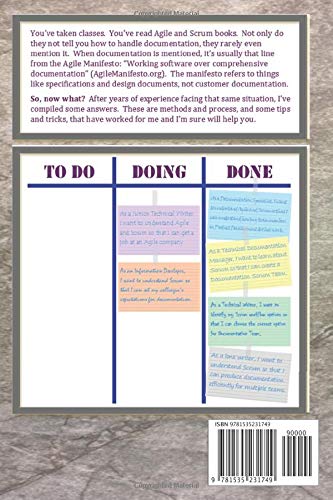
You’ve taken classes. You’ve read Agile and Scrum books. Not only do they not tell you how to handle documentation, they rarely even mention it. When documentation is mentioned, it’s usually that line from the Agile Manifesto: “Working software over comprehensive documentation” (AgileManifesto.org). The manifesto refers to things like specifications and design documents, not customer documentation.
So, now what? After years of experience facing that same situation, I’ve compiled some answers. These are methods and process, and some tips and tricks, that have worked for me and I’m sure will help you.
Leadership
Content & Systems
Process
Collaboration
Documentation & Authoring: Arbortext, DITA, Document360, Dreamweaver, FrameMaker, HTML/XML, IXIASOFT CCMS, Markdown, OxygenXML, Readme.io, RoboHelp
Content & Collaboration: Confluence, Google Workspace, Jira, Miro, Notion, SharePoint, Slack
Version Control & CI/CD: Git, Jenkins, Subversion (SVN), TortoiseGit
AI Tools: ChatGPT, Claude, Gemini, Prompt Engineering
Design & Visual: Canva, GIMP, Illustrator, InDesign, Lucidchart, PaintShop, Photoshop, Visio
Complete resume available upon request.